

NautilusTrader
Quant teams backtest and trade live with the same strategy code using this open-source Rust and Python trading engine.

NautilusTrader: Algo Trading Engine for Polymarket, Crypto & DeFi
What is NautilusTrader?
NautilusTrader is a free open-source algorithmic trading engine with a Rust core and Python strategy layer that lets quant developers run the same code across backtesting, simulation, and live trading on crypto exchanges, DeFi chains, and prediction markets like Polymarket.
Ready to try NautilusTrader?
Open the official site and get started in a few clicks.
NautilusTrader Overview
NautilusTrader is a free, open source algorithmic trading engine with a Rust core and a Python layer on top. It ships with an official Polymarket adapter, so you can stream live order book data and send orders to Polymarket markets from your own code. The same engine handles backtesting and live execution, and your strategy code stays unchanged between them.
This is a tool for quant developers and systematic traders who already write Python and want compiled speed underneath. If you want a point and click bot, look elsewhere. The learning curve is real, and you also need to bring your own historical data, since nothing comes bundled.
Setup is standard Python work. You install it with pip install nautilus_trader, write a strategy class that reacts to market events, and configure your instruments and risk limits. You run the strategy in the backtest engine on historical data first. When the results look right, you swap the data and execution clients for the Polymarket adapter, add your API credentials, and go live with the same strategy code. That parity is the main reason people pick it.
What sets it apart from most Polymarket trading bots and frameworks is depth. The backtester replays tick data at nanosecond resolution with configurable fill and fee models, so results are reproducible. You get advanced order types like iceberg and trailing stops, though Polymarket only supports a subset of them. One runtime can also trade across several venues at once, so a strategy can watch crypto exchanges or Betfair alongside Polymarket. The core is free under an open source license, and paid Pro and Cloud versions are announced but not out yet.
My honest take: this is one of the more serious options for automated Polymarket trading, but it asks a lot from you. Experienced developers get a fast, deterministic engine. Everyone else will hit a wall of documentation before they place their first trade.
NautilusTrader Key features
-
Rust Core, Python Control
The performance-critical path runs in Rust for high throughput and low latency. You write strategy logic and configuration in Python.
-
Backtest to Live Parity
The same strategy code, event handlers, and config run in backtest and live modes. You only swap the data and execution clients, which removes a major source of deployment risk.
-
Advanced Order Types
Supports market, limit, stop, trailing stop, and iceberg orders, plus OCO, OUO, and OTO contingency groups. Time in force options include IOC, FOK, GTC, and GTD.
-
Multi Venue Trading
One runtime manages instruments and strategies across several venues at once. Coverage spans crypto exchanges, equities, futures, Betfair, and Polymarket.
-
Nanosecond Backtesting
Replays quote ticks, trade ticks, bars, and order book deltas with fixed event order and UTC nanosecond timestamps. The engine is fast enough for reinforcement learning and other AI training workloads.
-
Modular Venue Adapters
Any venue with a REST API or WebSocket stream can be integrated. Official adapters cover Binance, Bybit, Interactive Brokers, Betfair, Polymarket, and Databento.
-
Built In Risk Tools
Position tracking, margin handling, and configurable risk limits work the same in backtest and live. Optional Redis or PostgreSQL persistence supports state recovery.
-
Custom Components
You can add your own actors, execution algorithms, and data types. The message bus supports publish subscribe and request response patterns with MessagePack and Cap'n Proto serialization.
-
Free and Open Source
The core engine is free under the LGPL 3.0 license and installs via pip. You pay only for your own infrastructure and the fees charged by connected venues.
NautilusTrader Fees
-
Core engine The open source engine is free under the LGPL 3.0 or later license, and installation via PyPI carries no charge.
-
Your own costs You pay only your own infrastructure costs (compute, data feeds) and the trading fees charged by the venues you connect.
-
Pro and Cloud NautilusTrader Pro and the Cloud Platform are announced commercial layers marked coming soon with no public price list at the time of writing.
How to use NautilusTrader
-
Set up your environment
Install Python 3.12 or newer, then create a virtual environment for your project.
-
Install the package
Run pip install nautilus_trader, or the equivalent with uv. Add optional extras if you need specific venue adapters.
-
Write your strategy
Import the required modules and define a class that inherits from Strategy. Override event handlers such as on_bar or on_quote_tick with your own logic.
-
Configure instruments and risk
Set your instruments, data sources, and risk parameters with the typed configuration objects.
-
Run a backtest
Create a BacktestEngine or BacktestNode, load your data (synthetic, Parquet catalog, or an adapter), add the strategy, and run it.
-
Connect live venues
Configure a LiveNode or TradingNode with the data and execution client factories for your target venues. Supply your API credentials securely and start the node.
-
Monitor your engine
Watch logs, the cache, portfolio reports, and any custom actors while the engine runs. Dispose of the engine when you finish.
-
Iterate and improve
Adjust parameters or swap clients and run again. Your strategy code stays identical across backtest and live environments.
NautilusTrader Review
Pros
- The same strategy code runs in backtest and live trading with no changes.
- The Rust core processes market data and orders at nanosecond resolution.
- An official adapter connects directly to Polymarket.
- One runtime can trade across several venues and asset classes at once.
- The core engine is free and open source under LGPL 3.0.
- Backtests support custom fill, latency, and fee models for realistic results.
- The engine is fast enough to train reinforcement learning agents.
- Python handles strategy logic, so quant teams can prototype quickly.
Cons
- The learning curve is steep for users without solid Python and systems programming experience.
- Users must supply their own market data; no free historical feed comes bundled.
- The Pro and Cloud products are still marked coming soon with no public pricing.
- The documentation is dense and advanced topics take careful study.
- Some venue adapters are still maturing.
- Not every advanced order type works on every venue.
- Windows builds use standard precision instead of the highest precision mode on Linux and macOS.
Our verdict
NautilusTrader gives you a production-grade algorithmic trading engine with a Rust core and a Python strategy layer, and its Polymarket adapter connects straight to the venue's REST and WebSocket feeds. Its biggest strength is research-to-live parity: the same strategy code runs in backtest and live trading, so you avoid the classic trap where a backtest wins and the live bot loses. The engine handles multi-venue portfolios and nanosecond backtesting, and the core is free and open source under LGPL 3.0. The catch is the steep learning curve: you need solid Python skills and your own market data, and there is no point-and-click mode. Quant developers and systematic traders who want one engine for Polymarket plus crypto exchanges will get the most from it; beginners should start elsewhere.
Is NautilusTrader safe & legit?
Nautech Systems Pty Ltd, a self funded Australian company founded in 2015 and led by CEO Chris Sellers, builds NautilusTrader, and the code is open source under LGPL 3.0 with thousands of GitHub stars and regular releases. The project ships an official Polymarket adapter and is used by quant developers and trading desks, so it has real standing in the community. No red flags or scams are known; the main thing to remember is that it is trading infrastructure only, not a broker or advisor, so you stay responsible for your own API keys, risk, and compliance.
X account intel @NautilusTrader
-
Based in Australia
-
Joined X March 2024 2 years ago
-
Username changes 1 rename last on Mar 24, 2024
-
Signup source Web
Public profile signals from X. Use as one input alongside other due-diligence.
Wallet blacklist scan checked Aug 15, 2026
- MetaMask Not flagged
- Phantom Not flagged
- ScamSniffer Not flagged
- EtherAddressLookup Not flagged
- Keplr Wallet Not flagged
Domain nautilustrader.io checked against public crypto wallet blacklists.
NautilusTrader FAQ
Does NautilusTrader work with Polymarket?
Is NautilusTrader free?
Do I need to know how to code?
Can I use the same strategy code for backtests and live trading?
What do I need to get started?
NautilusTrader Updates
-
 The same backtest config runs live with no rewrite: backtest the GridMarketMaker on Tardis data, then point the same parameters at a Rust LiveNode with the deadman's switch armed. The adapter also fans order submits across parallel connections for redundancy.
- 340 views
-
New tutorial: grid market making on @BitMEX XBTUSD. Backtest the shipped strategy on free Tardis quote data, then run the same config live in Rust.
Built around the deadman's switch: a server-side cancel-all timer the engine refreshes on a schedule, so a dropped connection clears your stranded quotes.
https://nautilustrader.io/docs/latest/tutorials/grid_market_maker_bitmex/1 more in this thread
When we add a venue adapter, we look for primitives that make live trading safer to run. BitMEX gives the engine two it uses directly: a server-side cancel-all timer that clears your orders if the client goes dark, and redundant order submission across parallel connections.- 2 replies
- 2 reposts
- 12 likes
- 1.6K views
-
NautilusTrader just crossed 1.5M downloads.
269k in the last 30 days alone.
Thank you to everyone building with us. The best is ahead. https://pepy.tech/projects/nautilus-trader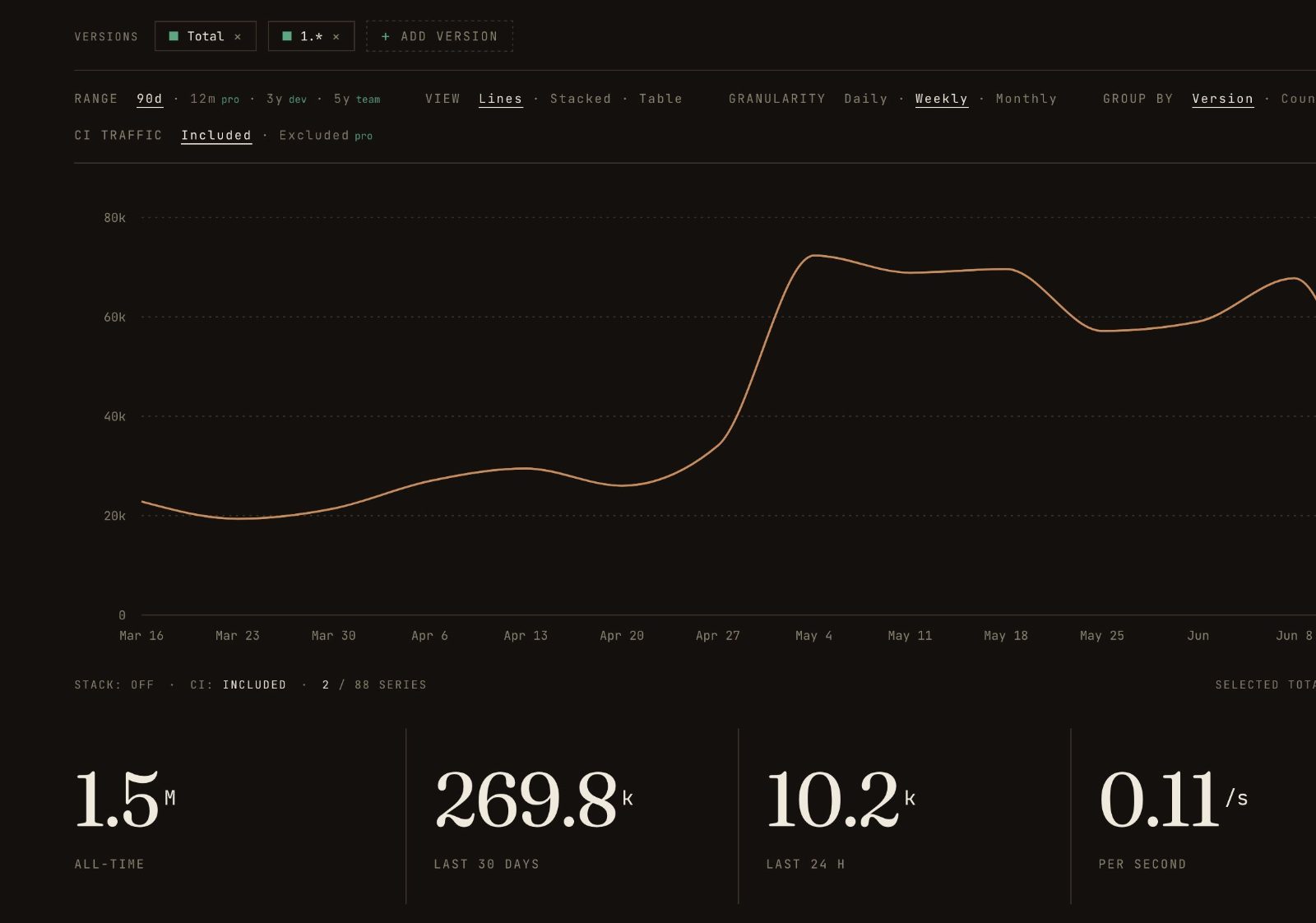
- 2 reposts
- 10 likes
- 496 views
-
The industry is waking up to the sustainability of options yield.
Unlike traditional yield farming, it's more nuanced; selling vol, managing delta, hedging.
If you've wanted to run options yield strategies onchain, our partners at @NautilusTrader just put together a guide that handles the hard parts:
https://nautilustrader.io/docs/nightly/tutorials/delta_neutral_options_derive/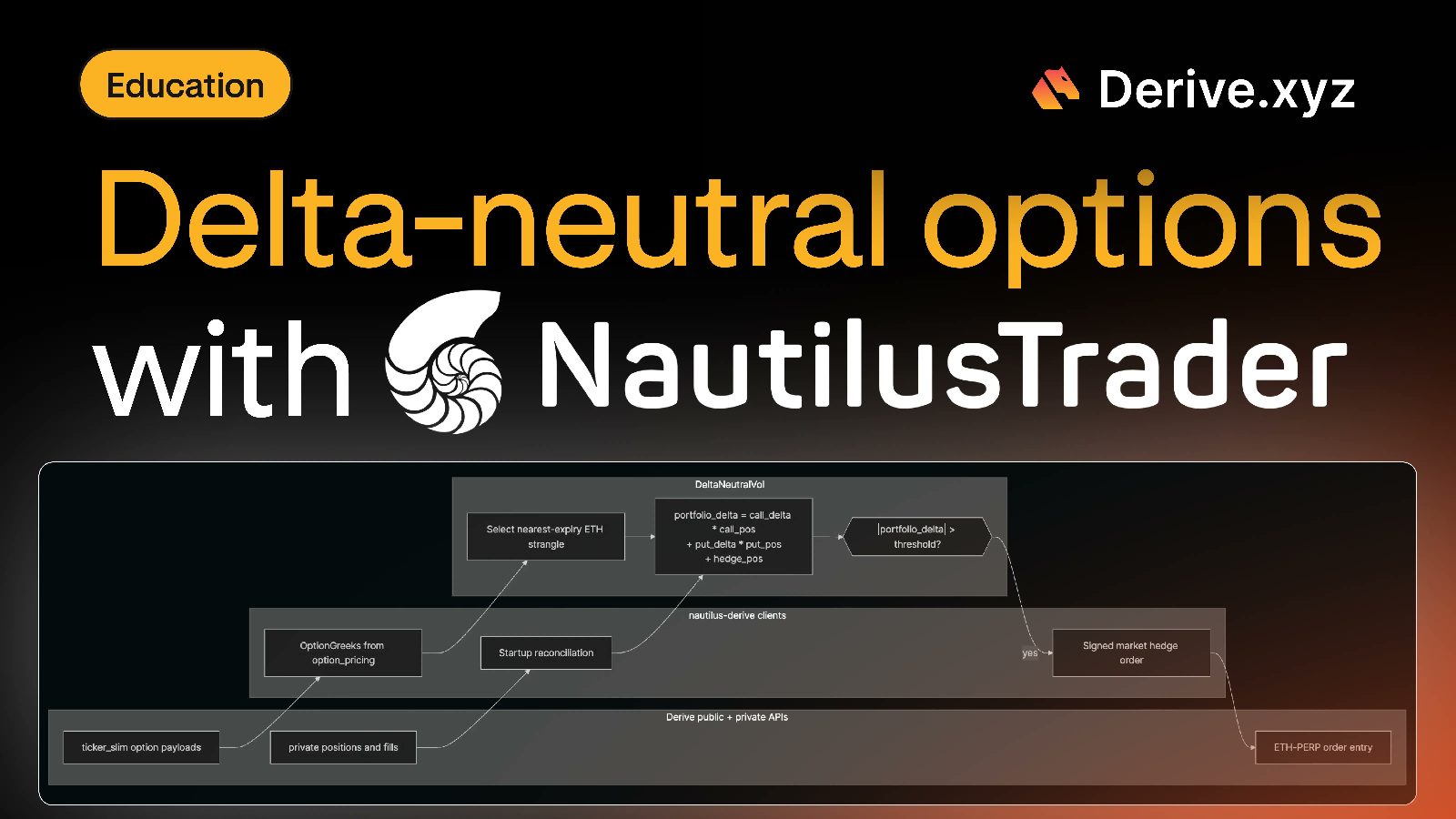
- 3 replies
- 6 reposts
- 67 likes
- 9K views
-
Derive is integrating with @NautilusTrader.
Systematic traders can now access Derive markets through an open-source trading engine built for research, backtesting and live execution.
Spot, perps and options are supported from the initial integration.
- 4 replies
- 6 reposts
- 49 likes
- 7.4K views
-
On-chain volume attributed to NautilusTrader across @HyperliquidX and @Polymarket now over $100 million.
$56 million in the past two weeks.
These are 2 of the 15 venues we support. Two more DEX venues land soon.
Live stats: http://nautilustrader.io/resources/stats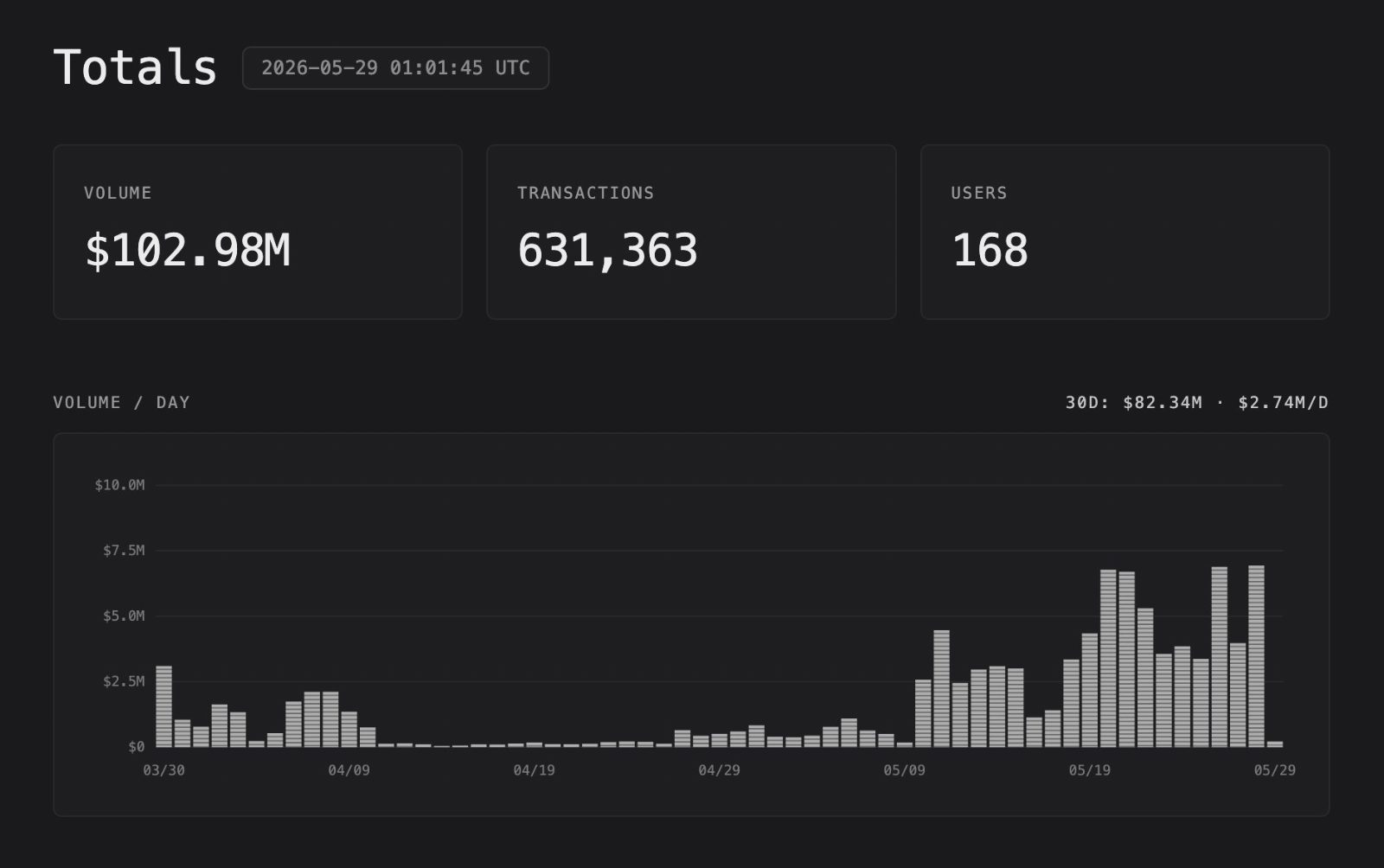
- 2 reposts
- 9 likes
- 567 views
-
The engine is open source by design. You and your auditors can read its logic and trace what it does, rather than trust a black box. The higher the stakes, the more transparency matters.
https://github.com/nautechsystems/nautilus_trader- 2 reposts
- 7 likes
- 556 views
-
When an engine touches live capital, you should be able to prove what you're running, not take it on trust.
NautilusTrader ships reproducible, signed builds with SLSA Build Level 3 provenance. Verify any release yourself.
https://nautilustrader.io/security/supply-chain/- 2 reposts
- 12 likes
- 609 views
-
Information-driven bars sample by content rather than clock time. A quiet hour might generate no new bars; a burst at the London open can generate many. @lopezdeprado spent chapters on why it gives better-behaved inputs for systematic work.
- 1 likes
- 466 views
-
Open-source algo trading on Kraken Futures keeps leveling up 🚀
@NautilusTrader just dropped a full Rust walkthrough: Hurst/VPIN on our BTC perp, from sim to live 👀- 1 replies
- 2 reposts
- 26 likes
- 6.5K views
-
Information-driven De Prado bars, VPIN, and Hurst on Kraken. End-to-end out of the box available now, and the same code runs in backtest and live: http://nautilustrader.io/docs/nightly/tutorials/hurst_vpin_kraken/
1 more in this thread
The @krakenpro adapter used in the tutorial is first-class in the engine and implemented in @rustlang, same interface as every other venue adapter: https://nautilustrader.io/docs/nightly/integrations/kraken/- 2 replies
- 2 reposts
- 14 likes
- 8K views
-
The clock in NautilusTrader does more than return timestamps. It defines how time enters the engine: as monotonic nanosecond timestamps, as scheduled events, and as a dependency shared across backtesting and live trading.
This allows timer-driven logic to run against historical data and real markets through the same interface and execution model.
https://nautilustrader.io/blog/clocks-and-timers/- 3 replies
- 3 reposts
- 10 likes
- 910 views
-
NautilusTrader is a deterministic, event-driven trading engine that runs one execution model across research and production.
Why NautilusTrader exists, the architectural decisions behind it, and why that matters in practice: https://nautilustrader.io/blog/why-nautilustrader-exists/- 4 replies
- 4 reposts
- 63 likes
- 1M views
-
Production-grade trading engine.
Rust-native. Open source.
Deterministic event-driven core.
Research-to-live parity.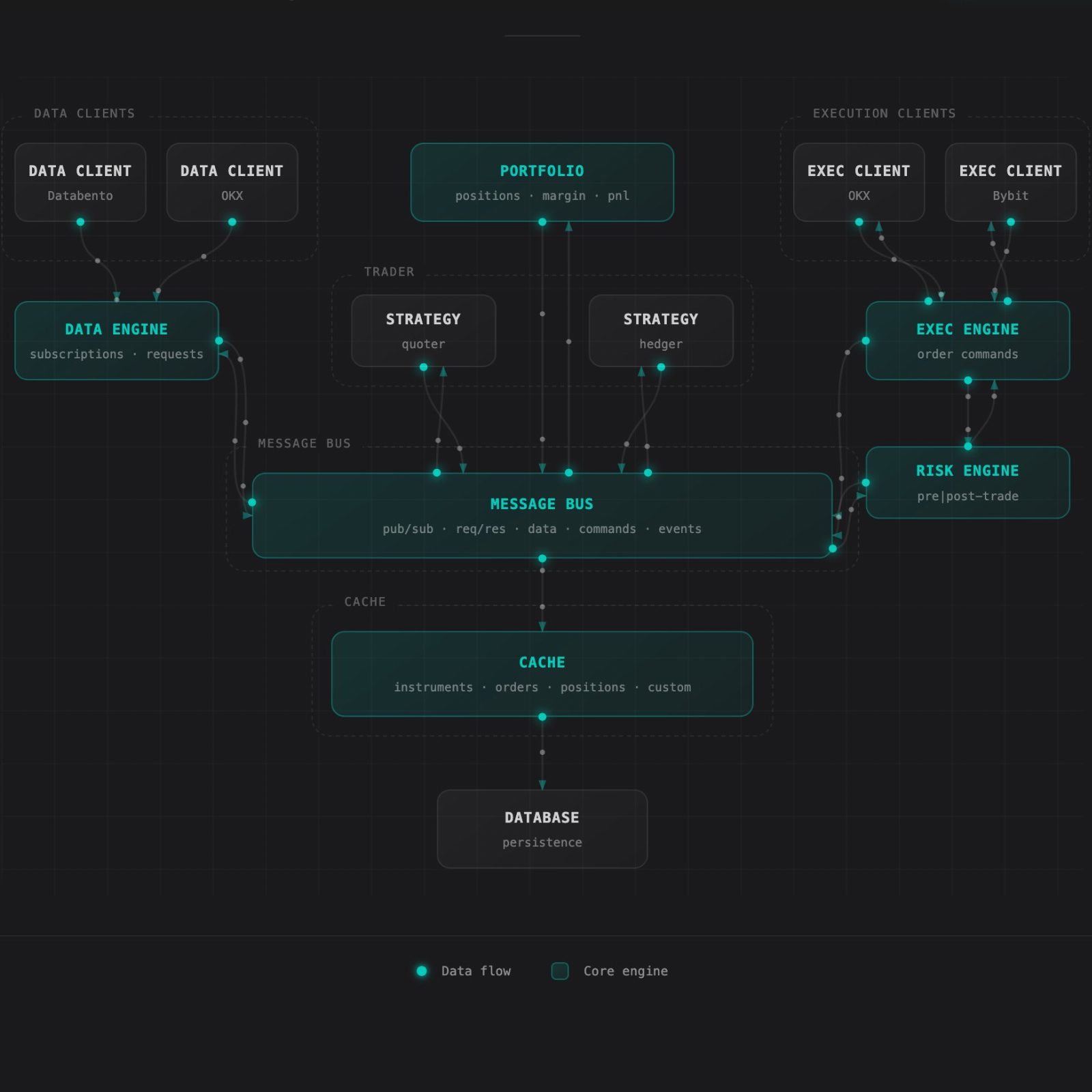
2 more in this thread
The system is designed for multi-venue deployment.
Venue adapters operate at the edge of the core runtime.
The execution model remains consistent across venues.Further architectural and deployment notes will follow.- 13 replies
- 52 reposts
- 830 likes
- 78.5K views
NautilusTrader Reviews & Comments
No reviews yet. Be the first to share your experience.
NautilusTrader alternatives
Other Polymarket tools that do a similar job. Compare and pick what fits your workflow.
-
Compare
Kreo
Kreo copies proven Polymarket and Kalshi wallets in real time, so you ride smart money tr…
-
Compare
Tailgate
Copy sharp bettors' plays at the best price across prediction markets, and get paid when…
-
Compare
TradePolyBot
TradePolyBot lets Polymarket traders buy, sell, and automate positions without leaving Te…
-
Compare
PolyCop
Traders get hands-free Polymarket execution through a Telegram bot that copies wallets, s…




Recommended reading
In-depth guides for Trading Bots — get more out of tools like NautilusTrader.
-
Tool Reviews
Best Polymarket Trading Bots 2026: Copy Trading & Sniper
Five Polymarket trading bots tested for 2026. Compare copy trading speed, sniper orders, fees after the March rate change, setup…
29 min read -
Tool Reviews
Best Polymarket CopyTrading Bot 2026
This breakdown covers the five best Polymarket bots available right now: PolyCop, Kreo, TradePolyBot, PolyGun, and a forward-look…
14 min read -
Tutorials
The Ultimate Guide to Copy Trading on Polymarket
Finding a profitable wallet is the easy half. This walks through picking one worth following, then setting the sizing, filters an…
6 min read


Ready to try NautilusTrader?
Open the official site and get started in a few clicks.
Leave a comment