
Polymarket Esports Markets Explained: What Traders Use in 2026
How Polymarket esports markets work in 2026: CS2, LoL, Dota 2 and Valorant broken down, plus fees, live trading edges and the full event calendar.


Polymarket esports volume reached about $790 million in July 2026. That is a record for the category and a 33% rise from June. Sports markets now produce more than 62% of everything traded on the platform, and competitive gaming sits near the front of that group.
A platform that built its name on the 2024 US election cycle now moves more money on Counter-Strike rounds than on most political questions. This guide covers what you can trade, how each game behaves as a market, what the numbers mean, and where informed traders still find room to work.
Why Polymarket Esports Volume Jumped in July
The growth traces back to one deal. In late June 2026, Polymarket became the exclusive prediction market partner of GRID, the esports data company that holds direct agreements with Riot Games, BLAST, EFG, and Ubisoft. GRID pulls information straight from game servers.
Polymarket rebuilt its esports hub around that feed. Traders get ad-free streams that run ahead of public broadcasts, live data widgets, and match statistics inside the same page as the order book.
"Esports moves fast, and so should the markets built on it," said Ari Borod, President of Sports Business Development at Polymarket.
GRID CEO Moritz Maurer made a related point when the deal went public: trading environments depend on information that arrives fast and holds up under scrutiny.
| Metric | Figure |
|---|---|
| July 2026 esports volume | About $790 million |
| Month over month growth | 33% |
| Sports share of total platform volume | Over 62% |
| GRID partnership announced | Around June 23, 2026 |
| Titles driving most volume | CS2, League of Legends, Dota 2, Valorant |
Server-level data does more than improve the viewing experience. It settles contracts. Disputed resolutions kill trust in a prediction market faster than anything else, and official data from the tournament source removes most of that risk.
What You Can Trade on Polymarket Esports
Every contract asks a yes or no question. You buy shares between 1 cent and 99 cents, and the price equals the implied probability. A team at 40 cents carries a 40% chance according to the market. Correct shares pay $1.00 at settlement. Wrong ones pay nothing.
You can also sell before the match ends. Buy a team at 35 cents, watch them take map one, sell at 62 cents, and bank the difference without caring who wins the series. That single feature separates Polymarket esports from a traditional sportsbook ticket.
| Market type | What it asks | Typical liquidity |
|---|---|---|
| Series moneyline | Who wins the whole match | Deepest |
| Map or game winner | Who wins map 1, map 2, map 3 | Deep during live play |
| Map handicap | Team wins 2-0 or covers -1.5 maps | Medium |
| Total maps | Series goes over or under 2.5 maps | Medium |
| Round and kill totals | Over or under a set number | Thin, event dependent |
| Tournament futures | Champion, winning region, group winner | Thin but open for weeks |
| Player and meta props | Awards, MVP, map pool questions | Thin, major events only |
Series moneyline
The core product across every title. Prices move on team news before the match and on scoreboard events during it. Beginners should live here until the mechanics feel familiar.
Map and game markets
These reprice several times per map. A CS2 team that wins the pistol round and the following two rounds can swing 8 to 12 cents on the map winner inside 90 seconds. The GRID feed updates before public streams show the same information.
Futures
LCK season winner, Worlds winning region, The International champion, Esports World Cup club titles. Spreads run wider and fills take longer, though you can build a position months early and trim it as brackets resolve.
Every Major Esport on Polymarket, Explained
Each title trades differently. Formats, comeback mechanics, and patch cycles change how prices behave, and a strategy that works in Counter-Strike will lose money in Dota.
Counter-Strike 2

CS2 usually carries the highest number of live Polymarket esports markets on any given day. Matches run best of one or best of three, with best of five in some finals. Each map goes to 13 rounds under MR12 rules, with overtime at 12-12.
What trades: series winner, individual map winners, map handicap, total maps, round handicaps, and totals on rounds won.
What moves the price: the veto decides a lot before anyone fires a shot, because map pools and side preferences vary hugely between teams. During play, the economy drives everything. A team that loses the pistol round and the following anti-eco often falls behind by four rounds inside five minutes, and the map price reflects that within seconds on the official feed.
Peak liquidity arrives during IEM events, BLAST tournaments, and the Valve majors. The Esports World Cup runs a separate $2 million CS2 bracket with 32 teams at the Accor Arena in Paris, and BLAST Open Porto overlaps into September with $1.1 million on the line.
Practical note: CS2 map prices overreact to round streaks. A 4-0 start looks decisive on the scoreboard and matters less than the price implies, since side switches at round 12 reset most of the advantage.
League of Legends

League produces the deepest single-match liquidity on Polymarket esports during major events, and it attracts more specialist traders than any other title.
Regular season matches in the LCK and LPL run best of three. Playoffs and international knockouts run best of five. The 2026 calendar puts MSI in Daejeon from June 28 to July 12, and Worlds across Los Angeles, Allen, and Brooklyn from October 15 to November 14 with 19 teams.
What trades: series winner, game 1, game 2 and game 3 winners, map handicap, total games, and event-specific props like first blood or total kills at bigger tournaments.
What moves the price: draft quality, patch changes, and side selection. Blue side historically wins more often at the top level, and the market prices that in. Once the game starts, gold differential, dragon souls, and Baron timings carry the swings. A 3,000 gold lead at 20 minutes rarely holds the same weight as a Baron buff taken at 28 minutes.
One repeated pattern among profitable League traders: buying underdogs in game two after a lopsided game one loss. Crowds write teams off. Best-of-five series in this game reverse often enough that 25-cent prices frequently deserve to be 35.
Dota 2

Dota rewards patience and punishes panic more than any other market on this list. Group stages run best of one or best of three, playoffs run best of three, and grand finals run best of five. The International 2026 lands in Shanghai from August 13 to 23.
What trades: series winner, individual game winners, map handicap, total games, first blood, first Roshan, kill totals, and game duration over/under.
What moves the price: the draft carries more weight here than in League, because Dota heroes scale differently across a 45-minute game. Buybacks and the Aegis of the Immortal create comebacks that no other title matches. A team down 20,000 gold can win one teamfight, take Roshan, and end the game eight minutes later.
That comeback mechanic is the whole trade. Live Dota prices often push a losing side to 8 or 10 cents in games where the real probability sits closer to 20. Traders who understand item timings and buyback economics take the other side of those prices repeatedly.
Valorant

Valorant sits close to CS2 in structure and behaves similarly in the order book. Matches run best of three, with best of five in grand finals. Maps go to 13 rounds with overtime.
What trades: series winner, map winners, map handicap, total maps, round handicaps, and pistol round outcomes at some events.
What moves the price: agent compositions per map, the veto, and the same economic pressure that drives CS2. Valorant adds one wrinkle, because ultimate abilities charge across rounds and create predictable swing rounds. A team holding four ultimates on defense wins more often than the round-by-round price suggests.
The VCT 2026 calendar finished Masters London on June 21 and runs Champions in Shanghai from September 24 to October 18 with a $2.25 million prize pool. Regional league matches through the season offer thinner books than the international events.
Call of Duty

CDL matches run best of five across Hardpoint, Search and Destroy, and Control, and each mode carries its own market logic. Hardpoint scores to 250 and moves in visible chunks. Search and Destroy runs first to six rounds and swings on single rounds, which makes it the most volatile map type in any Polymarket esports market.
What trades: series winner, map winners, map handicap, and total maps. Round totals appear at larger events.
Warzone competitions work differently, since battle royale scoring runs across multiple games with points. Those markets stay thin. The Resurgence Series Champions event ran at the Esports World Cup from July 29 to August 1.
Rainbow Six Siege
Siege matches run best of one in league play and best of three in playoffs. Maps go to seven round wins, with attack and defense sides swapping at the halfway point.
What trades: match winner, map winner, total rounds, and round handicap.
What moves the price: operator bans, site picks, and site anchors. A team that wins three rounds on defense usually holds a stronger position than the same lead earned on attack, and casual traders miss that difference. BLAST runs the major circuit, with the Six Invitational as the season peak.
Overwatch

OWCS series run best of five across map types including control, escort, hybrid, push, and flashpoint. Control maps are first to two and settle fast, which makes them useful for quick in-play entries.
What trades: series winner, map winner, map handicap, and total maps.
Overwatch has grown again since Blizzard brought back the older format. The OWCS Midseason Championship ran at the Esports World Cup from July 29 to August 1, the Overwatch World Cup Finals hit Anaheim on September 12 and 13, and the OWCS World Finals close the year in China from December 2 to 6.
Mobile Legends: Bang Bang

MLBB carries the largest viewership numbers of any title at recent Esports World Cups, and its betting volume grew 62% between 2024 and 2025 according to Oddin.gg data. MPL regional leagues in the Philippines and Indonesia feed into the M-series world championship.
Series run best of three in group play and best of five or seven in finals. Games are short, often under 15 minutes, so live map markets resolve quickly and reprice hard on single teamfights. Liquidity concentrates around M-series playoffs and EWC.
Honor of Kings
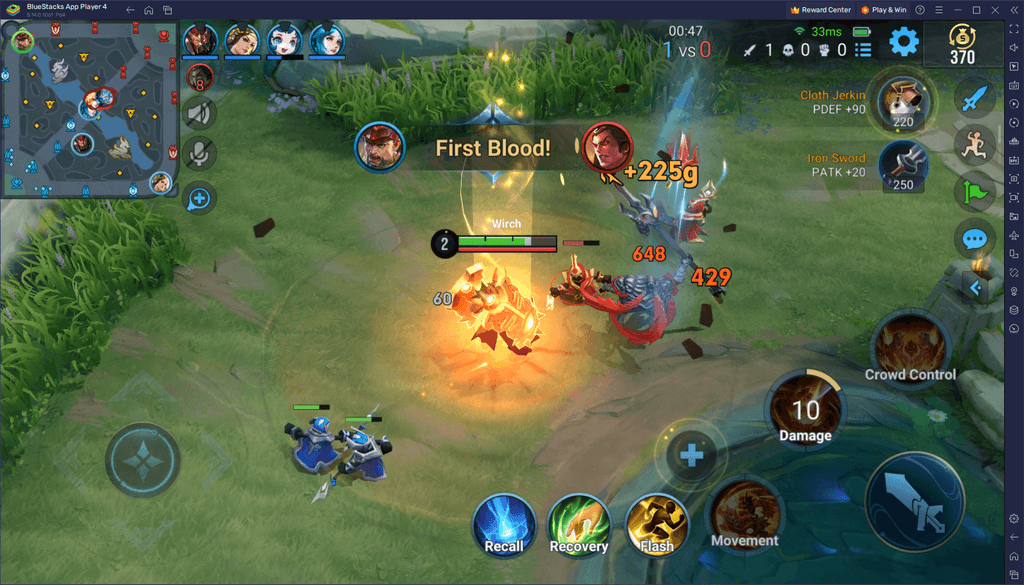
The KPL in China and the Honor of Kings International Championship anchor this title. KPL matches often run long series formats, up to best of seven, which creates a healthy number of individual game markets per match.
Books here run thinner than the western titles on Polymarket esports, and information moves through Chinese-language sources first. Traders who follow KPL roster news directly hold a real timing advantage over the rest of the order book.
How to Start Trading Polymarket Esports
Funding your account
Deposit USDC on Polygon, or use card and bank onramps. Polymarket charges nothing for deposits or withdrawals. Card issuers typically take 2% to 3% on conversion, while ACH transfers usually cost nothing. Buying USDC on an exchange and moving it to your Polymarket wallet keeps total costs under a dollar.
The US version runs as a CFTC-regulated exchange through Polymarket's QCEX acquisition and operates in all 50 states. The international version needs a crypto wallet. Rules depend on where you live, so check your own jurisdiction first.
Placing your first trade
Open the esports hub and filter by game. Follow CS2 only, and you see only CS2 books. Click a match and the series moneyline sits at the top, with map markets below it.
Buy at market price for speed, or set a limit order and wait for a better fill. Limit orders pay no taker fee and can earn liquidity rebates.
Fees on Polymarket esports
| Fee item | What you pay |
|---|---|
| Maker orders (limit) | Zero, plus possible rebates |
| Taker orders (market) | Category rate, applied per share |
| Sports category rate | Raised in July 2026, peaks near 50 cent prices |
| US regulated exchange | Flat taker fee around 0.30% with a maker rebate |
| Losing positions | No fee |
| Deposits and withdrawals | Free from Polymarket, network gas applies |
Fees scale with uncertainty, so a share bought at 90 cents costs far less in fees than one bought at 50 cents. Check the current fee schedule before sizing anything large, since the sports rate changed twice in 2026.
Where the Edge Still Exists
Official data closed the old latency gap. It did not close every gap.
Roster changes still move probability before the market catches up. A mid-laner swap announced two days before an LPL match sits in the price slowly, because most traders read results and not roster news. Patch notes work the same way in League and Dota, where a nerf to one hero class shifts which teams look strong.
Head-to-head style matchups matter more in esports than in traditional sport. Some CS2 teams lose 70% of their Mirage games and win 65% on Ancient. The veto tells you which version of the team shows up, and the series price often lags the veto by 30 seconds.
The market reads scoreboards. Traders who know why a scoreboard looks the way it does trade against people reading numbers without context.
Live trading amplifies all of it. The first seconds after a Baron steal, a Roshan fight, or a 1v3 retake still leave room for someone who understands the game better than the average participant.
Risks worth taking seriously
Prices gap. A single round, a disconnect, or a roster announcement can move a market 20 cents before you click. Thin regional matches fill slowly and cost more to exit than to enter. Position sizing matters more here than in slower categories, and live trading rewards discipline over conviction.
Esports Calendar for the Rest of 2026
| Event | Dates | Title |
|---|---|---|
| Esports World Cup, Paris | July 6 to August 23 | 25 events across 24 titles |
| The International 2026, Shanghai | August 13 to 23 | Dota 2 |
| BLAST Open Porto | August into September | CS2 |
| Overwatch World Cup Finals, Anaheim | September 12 and 13 | Overwatch |
| RLCS World Championship, Fort Worth | September 15 to 20 | Rocket League |
| Valorant Champions, Shanghai | September 24 to October 18 | Valorant |
| Worlds 2026, LA / Allen / Brooklyn | October 15 to November 14 | League of Legends |
| PUBG Global Championship, Istanbul | December 1 to 13 | PUBG |
| OWCS World Finals, China | December 2 to 6 | Overwatch |
Liquidity follows this calendar. Trade the events on this table and you get tighter spreads and faster fills than mid-tier regional matches offer.
Frequently Asked Questions
How do Polymarket esports odds work?
Prices are probabilities. A share at 27 cents means the market gives that outcome a 27% chance. Buyers push prices up and sellers push them down, so the number reflects what money believes right now.
Can I sell before the match ends?
Yes, and this is the main reason experienced traders prefer Polymarket esports to a sportsbook. You can exit a winning or losing position at any point while the book stays open.
Which esports title has the most markets?
Counter-Strike 2 usually leads on market count. League of Legends and Dota 2 produce the deepest liquidity per match during major events.
How fast do markets settle?
Resolution follows official tournament results through the GRID feed. Confirmation usually lands within minutes of the final round.
Do I need a crypto wallet?
The international version needs one. The US regulated version accepts cards and bank transfers directly.


